Why a prospect who agrees with you still says no
When a prospect agrees the problem is real and still says no, the problem is usually where it sits on their list, not your offer. Find out what is on fire for them right now, then either connect your fix to it or come back once it is out.
The situation
You found a real problem in someone's business. Not a guess. You can see it in their numbers, you can explain what it costs them, and when you show them, they nod. They agree with you.
Then they pass. Or they say "not right now." Or they stop replying.
You have done this a few times now, with people you know, people who respect your work. Every time, the same pattern. They see it, they agree, and nothing happens.
The complication
The obvious read is that your pitch was weak. So you sharpen the deck, add more proof, put the cost in bigger numbers. You push harder on how important this is.
That makes it worse. You are arguing a point they already accepted. Pushing harder on importance tells them you did not hear what is actually going on in their business, and it turns a "not now" into a "please stop." Meanwhile you start doubting the offer itself, which was never the issue.
The question
So how do you get a yes from someone who already agrees with you, without pushing harder on a problem they have chosen to leave alone?
The answer
A restaurant can be losing customers because it turns tables too slowly. That is real and fixable. But if meat costs just went up so far that the owner cannot make the menu work, nobody in that building is thinking about table turns. If the building is on fire, they are not choosing napkin colors.
1. Ask where your problem ranks
Before you pitch anything, ask one question: "Of everything on your plate right now, where does this sit?"
You are not asking whether it matters. They already told you it does. You are asking about everything else that matters more this quarter. The answer tells you what is on fire, and the thing on fire decides what they will spend money on.
Most people never ask because it feels like inviting a no. It is the opposite. It is the only question that tells you what a yes would require.
2. Place them on the grid
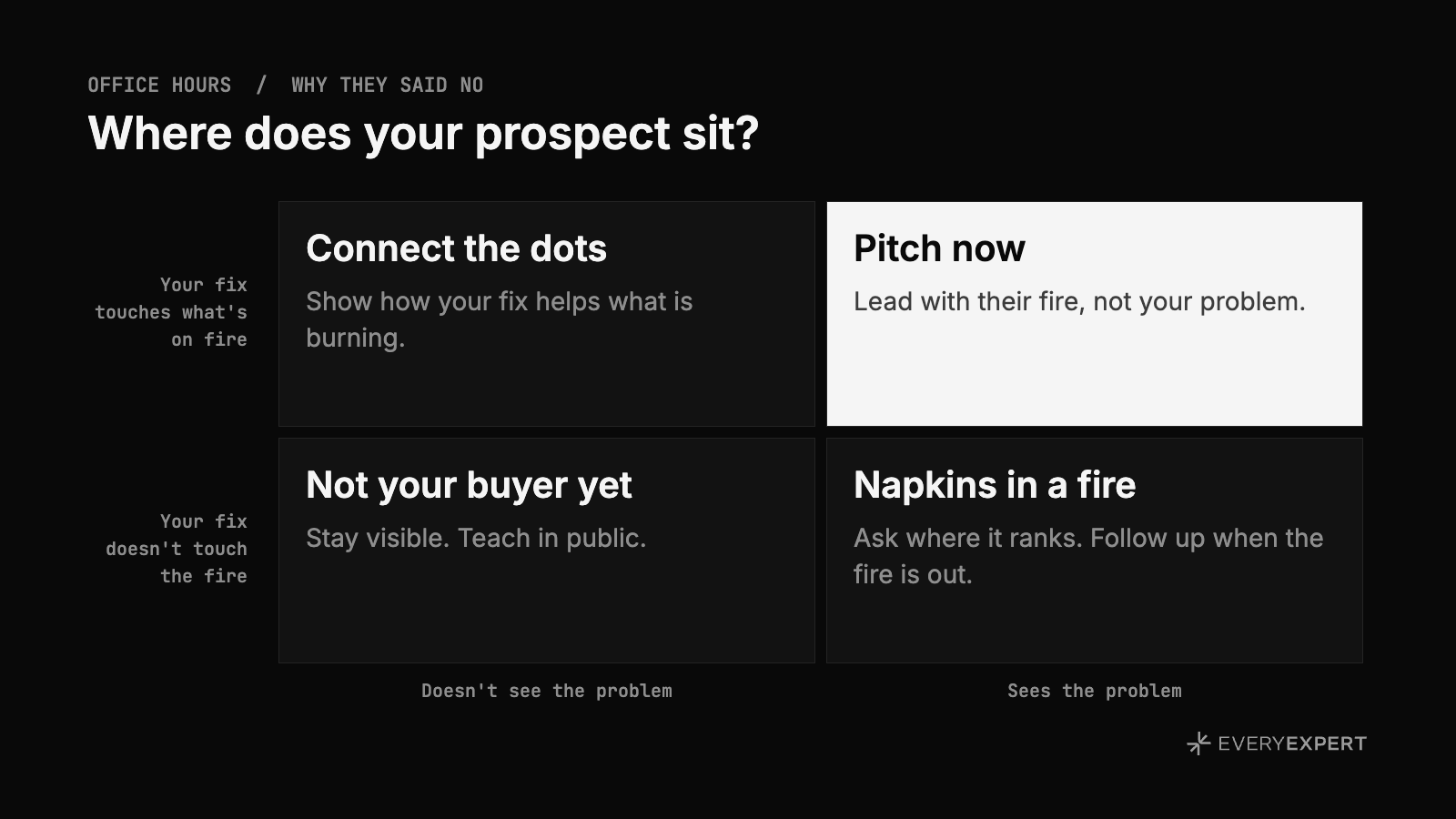
Two questions sort every prospect. Do they see the problem? Does your fix touch what is on fire for them?
They see it and it touches the fire. Pitch now, and lead with their fire, not your problem.
They see it, but it does not touch the fire. This is the napkins. Stop pitching. Ask when the fire will be out and follow up then.
They do not see it, but it touches the fire. Connect the dots for them. Faster table turns do help with meat costs, because more covers per night spread the same fixed costs further. Make that link in their terms.
They do not see it and it does not touch the fire. Not your buyer this quarter. Stay visible and teach in public, so they know who to call later.
3. Read the no as hard, not wrong
This is the Hard or Wrong Test applied to a single prospect. A no from someone who agrees with you is almost always hard: right offer, wrong moment. Rewriting the offer because of it is solving a problem you do not have.
Wrong looks different. Wrong is a clean sweep of people who do not think the problem exists at all. That calls for a different move, covered in A rejection is the cheapest market research you can get. Know which one you are looking at before you change anything.
When it is hard, the move is patience with a plan. Set the follow-up for when their fire is likely to be out, not for "in a few weeks," and say why you are coming back.
How this looks in practice
A dental practice consultant shows an owner that the front desk is missing a lot of new-patient calls. The owner agrees and passes. Asked where it ranks, the owner says a hygienist just quit and the schedule is in pieces. The consultant reframes the same fix as "stop losing the patients you can still see while you hire." The owner books.
A bookkeeper offers to help a contractor finally track what each job actually costs, so he can see which ones make money. The contractor agrees the books are a mess, but the busy season starts next week. The bookkeeper stops pitching, asks when things slow down, and calls back in November with the same offer. It closes in one call, because nothing about the offer changed except the timing.
An SEO consultant finds a software company bleeding traffic from a site migration. The marketing lead agrees and says the board wants pipeline this quarter, not traffic. The consultant ties the traffic loss to demo requests from organic search, which is the pipeline number the board cares about. Same audit, framed around their fire.
None of them pushed harder on the original problem. All of them found out what was burning first.
Do this today
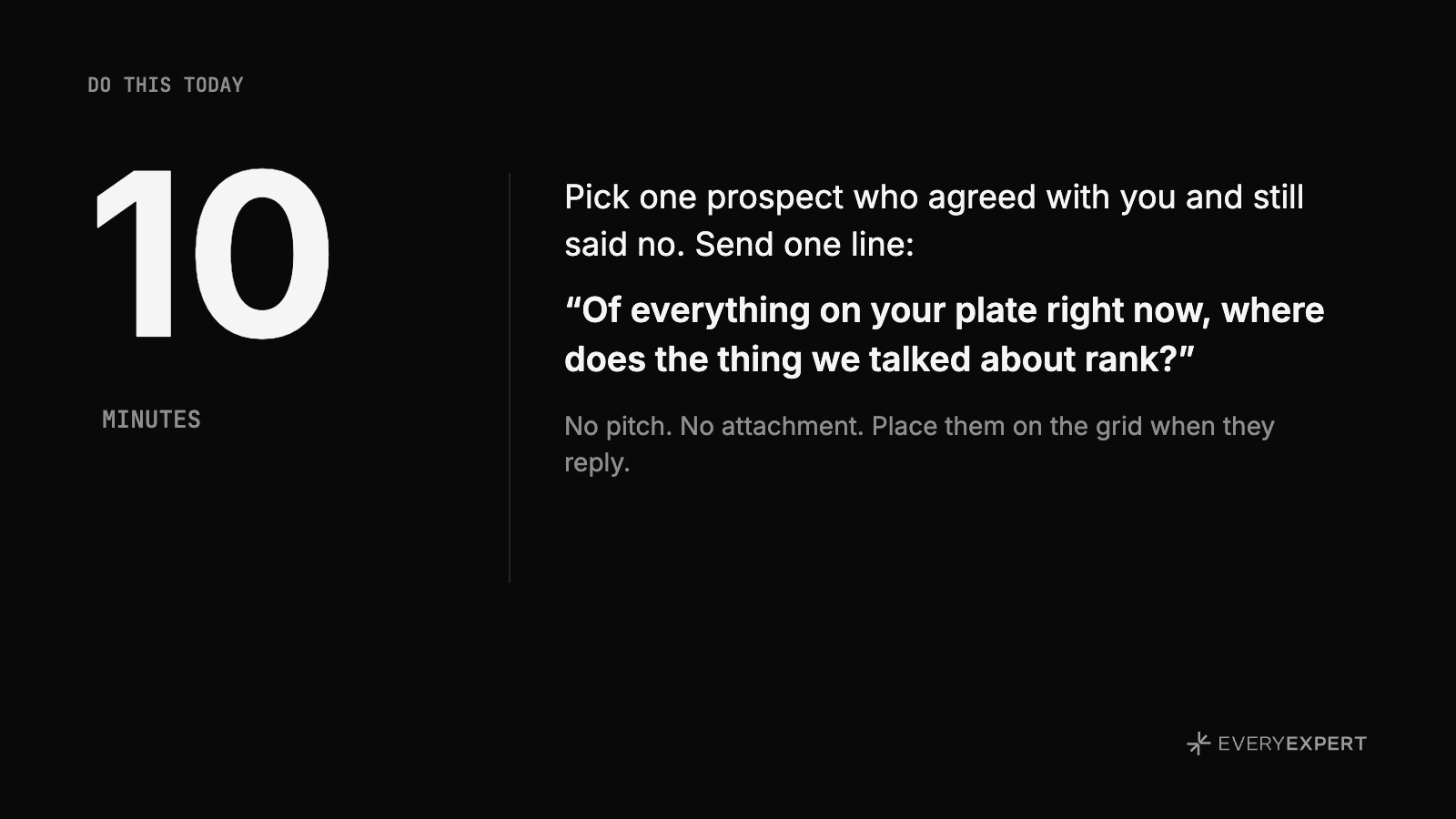
Pick one prospect who agreed with you and still said no. Send them one line: "Of everything on your plate right now, where does the thing we talked about rank?" No pitch, no attachment.
Ten minutes. Then place them on the grid when they answer.
Bring it back
Post what they said in the community, especially if their fire surprised you. If you are not sure which box someone is in, bring their exact reply to office hours along with what you offered them. The room can usually spot the fire faster than you can from inside the pitch.
Office hours
This came out of a live EveryExpert office hours session. A member asked why people who knew the problem kept saying no, and we worked through it in the room. That is what office hours is for: bring a real situation and leave with the next move.
Next session: [HOLD: date, time and registration link]
Not on EveryExpert yet?
EveryExpert is where people book paid calls with experts like you. Set up your page at everyexpert.com and the next person who agrees with you has somewhere to book.