What should you say when someone asks what you do?
When someone asks what you do, skip the elevator pitch and ask them a question about the people in their life you could help. Then say one line about helping people like them, and let them ask how.
The situation
Someone at an event turns to you and asks what you do. You have an answer ready. You have said it a hundred times, and it comes out smooth: who you serve, what you fix, the result.
They nod. They say "oh, cool." Then they look past your shoulder for the next person, or they tell you what they do, and the conversation moves on without ever coming back to you.
You know your work is good. You can explain it well. The explaining just does not seem to start anything.
The complication
The obvious fix is a better pitch. Tighter wording, a sharper result, a hook at the front. And practice does help. The more times you explain your offer, the more confident you sound, and some of the people who sound best are the ones who have fumbled it the most.
But a better pitch is still a pitch. While you recite it, the other person has nothing to do except wait for you to stop talking. They are an audience, and audiences do not ask follow-up questions. A more polished monologue just gets you the polite nod faster.
The question
So when someone asks what you do, how do you get them into the conversation instead of leaving them to wait for you to finish?
The answer
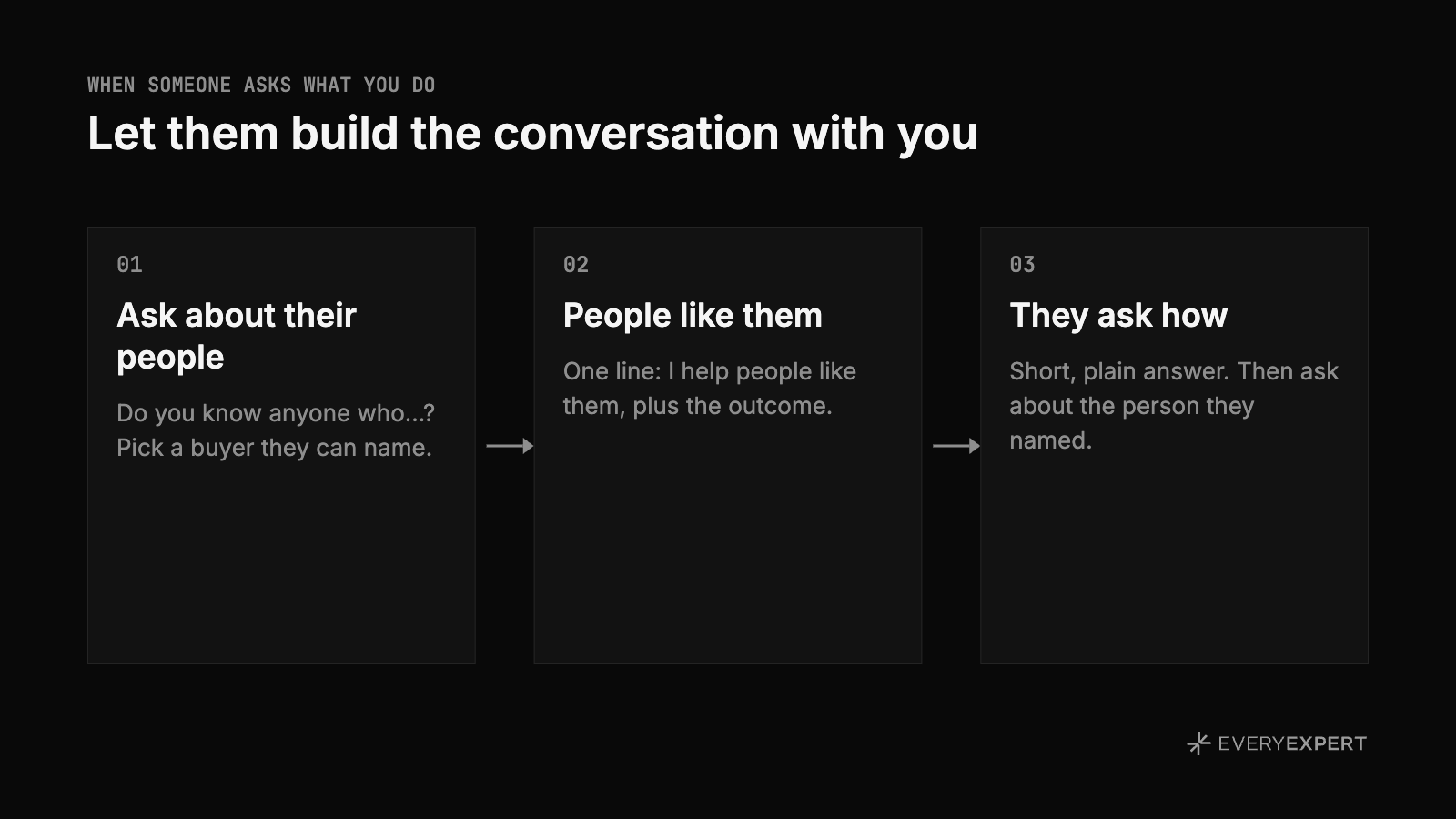
The example from the session: a digital marketing expert gets asked what they do. Instead of the pitch, they ask, "Do you have any entrepreneurs in your family or in your network?" They say yes. Then: "Well, I help people like them make money online." Now the other person is picturing someone they know, and the natural next words out of their mouth are "Oh, how?"
People support what they help create. When they help build the conversation, they want to keep it going.
1. Ask about their people first
Write one question that points at someone in their life who fits your buyer. Not a question about them, and not a quiz. Something easy to say yes to: "Do you know anyone who...", "Is there anyone in your family who..."
Keep it broad enough that most people can think of a name. The question does the work your opening line used to do. It tells them who you help, and it does it by putting a real person in their head instead of a category.
2. Answer with "people like them"
When they say yes, give one line: "I help people like them..." plus the outcome in plain words. No method, no framework, no credentials yet.
You are tying your work to someone they already care about. That feels different from hearing a stranger describe their services. One line, then stop.
3. Let them ask how, then keep it small
If the line lands, they will ask how. That is your opening, and it came from them. Give a short, honest answer. "It's kind of geeky, but..." works fine. Then hand it back: ask about the person they were thinking of.
This is where the reps from all those events still pay off. You are explaining the same thing you always explained. The difference is that now someone asked for it.
One caution: the question is there to involve them, not to show off. A line like "Remember the 2008 housing crash? I called it" is a question, technically. It still makes you the whole story. And once someone is curious, they still need to picture what a call with you looks like, which is covered in People don't book because they can't picture the call.
How this looks in practice
A voice coach used to open with "I help professionals speak with confidence," and got nods. At a mixer she asked instead, "Is there anyone at your work who dreads presenting?" The man she was talking to named his manager right away. "I help people like her sound like herself when she's nervous." He asked how, and the rest of the conversation was about his manager's next big presentation. He asked for her card before she could offer it.
An estate planning attorney found that saying "wills and trusts" made people change the subject. Now he asks, "Do you have parents who are getting older?" Most people do. "I help families like yours make sure nobody has to guess what they wanted." People ask what that involves, and he gets to explain the work to someone who is already thinking about their own family.
A home organizer asks, "Do you know anyone who's about to move?" The answer is usually yes, and often it is the person she is talking to. "I help people like them unpack once and not live out of boxes for a year." The next question is theirs, and the conversation turns into a story about a garage.
None of them changed what they offer. They just asked about someone the other person cares about before saying anything about themselves.
Do this today
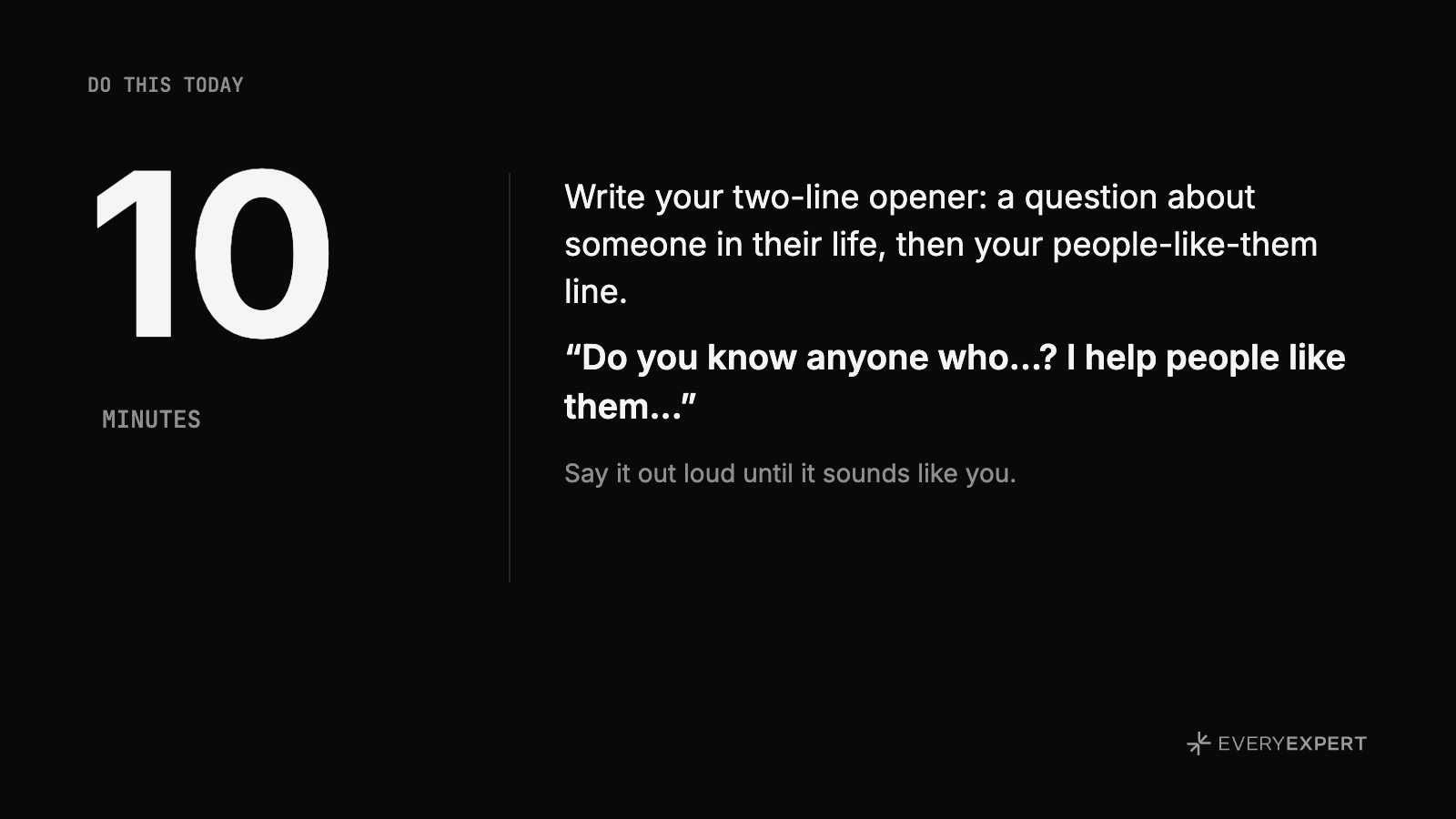
Write your two-line opener: the question about someone in their life, and the "I help people like them..." line that follows it. Say both out loud until they sound like you talking, not reading.
Ten minutes. Use it the next time anyone asks what you do, online or in person.
Bring it back
Post your question and your line in the community, and say what happened the first time you used it. If it fell flat, bring the exact words to office hours along with who you were talking to. The room can usually tell whether the question was too narrow, too clever, or pointed at the wrong person.
Office hours
This came out of a live EveryExpert office hours session. A member said she treats every event as a chance to workshop her pitch, and we talked about what to do besides polishing it. That is what office hours is for: bring a real situation and leave with the next move.
Next session: [HOLD: date, time and registration link]
Not on EveryExpert yet?
EveryExpert is where people book paid calls with experts like you. Set up your page at everyexpert.com so the next person who asks "how?" has somewhere to book.