Let them use AI first, then sell the review
When clients think AI can do your job, stop competing with the draft and let them bring it to you. Your offer becomes the review: you tell them exactly what is wrong with it and what to do next, which is the part AI cannot do for them.
The situation
A prospect tells you they will just use ChatGPT for it. Or a client you have worked with for years sends over something they wrote with AI and asks what you think. You read it and it is flat. Technically fine, nothing anyone will remember.
You can see every problem in it. You know how you would rebuild it. But the person in front of you has decided that the part you used to get paid for, the making of the thing, is now free.
The complication
The obvious move is to argue. You explain why AI cannot replace you, you point out how generic the draft is, you try to win the work back by showing you can make it better from scratch.
That puts you in a race with a tool that costs them close to nothing and answers in seconds. Even when you are right, you sound defensive, and the client hears "pay me to redo something you already did." Holding back what you know to protect the work does not help either. They can look you up and ask for your method by name.
The question
So how do you keep getting paid for what you know when clients are sure AI can do the job, without trying to out-produce the AI?
The answer
This came up when a member who coaches speakers said her clients now write their speeches with AI and send them over, and she spends the review crossing out dull paragraphs. She was already doing the valuable part. She just was not selling it.
1. Let them make the first draft
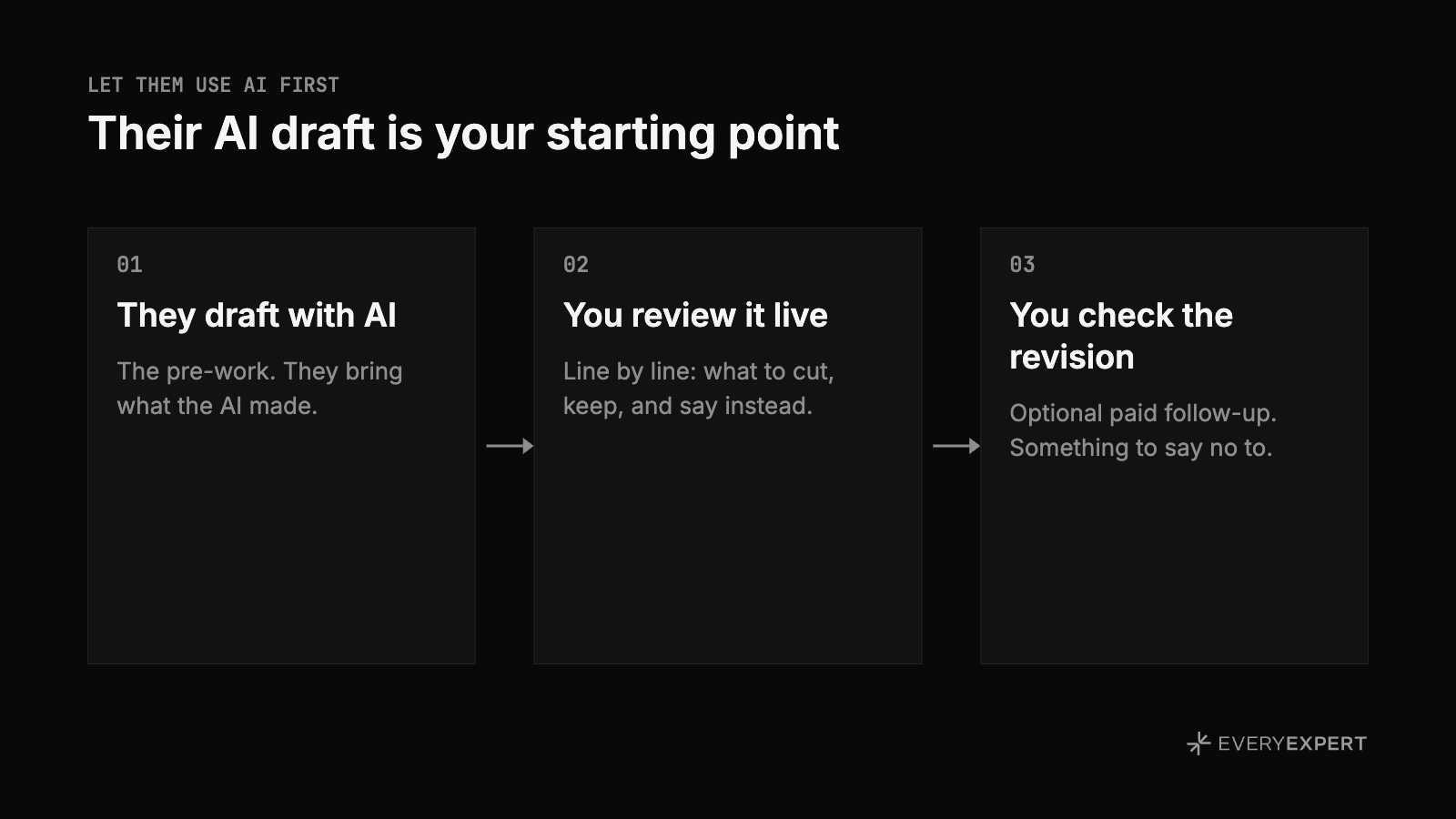
Your audience thinks they can do your job with AI. You know they cannot do all of it. Stop fighting about that and let them go first. Whatever they produce with AI becomes the starting point of your offer.
This flips the conversation. They get to keep the thing they are excited about, and you get to say: "You made your own speech? Great. Book a call and I'll tell you exactly where it falls short." They keep the draft. You bring the judgment.
2. Sell the review, by name
Information is free now. Customization and implementation are not. So name the offer around the part they cannot get from a chatbot: an audit, a markup, a review call where you go through their draft line by line and tell them what to cut, what to keep, and what to say instead.
You are still using the same skill. You are just applying it as auditing and advising instead of building from a blank page. It is also easier to buy, because the draft already exists and they can see the gap the moment you point at it.
3. Give them something to say no to besides everything
Package the review in parts. The AI draft is the pre-work. The review call is the live session. Then there is homework: they revise, and you review the revision in a second session. Charge for that follow-up separately.
If they want all three, good. If they say "we'll skip the follow-up," that is fine too, because they said no to one part instead of to you. The three-part version also lets you anchor the price higher before you drop a piece. The same logic works for courses: I once turned a request to spend a week on site into an online course as pre-work plus one live workshop, and the client took it. More on that in Sell the workshop before you build the course.
How this looks in practice
A freelance copywriter keeps hearing "we'll write the sales page ourselves with AI." Instead of pitching a full rewrite, she offers a markup call: send the AI draft, and she walks through it line by line on the call. Prospects who used to disappear now book, because they are buying help with something they already made.
A tax advisor gets a message from a small business owner who has been asking an AI how to handle quarterly estimates and wants a quick sanity check. The advisor turns the sanity check into a named review: bring what the AI told you, and he flags what does not apply to their situation and what to do instead. A follow-up review after they act on it is offered as a separate option.
A garden designer meets a homeowner who has already generated a garden plan with an AI image tool and is attached to it. She stops presenting her own concept and sells a plan review instead: what will drain, what will get enough sun, what will actually survive. A second review of the revised plan is optional. The homeowner keeps the idea they love and pays for the part that makes it work.
Each of them stopped competing with the draft and started charging for what comes after it.
Do this today
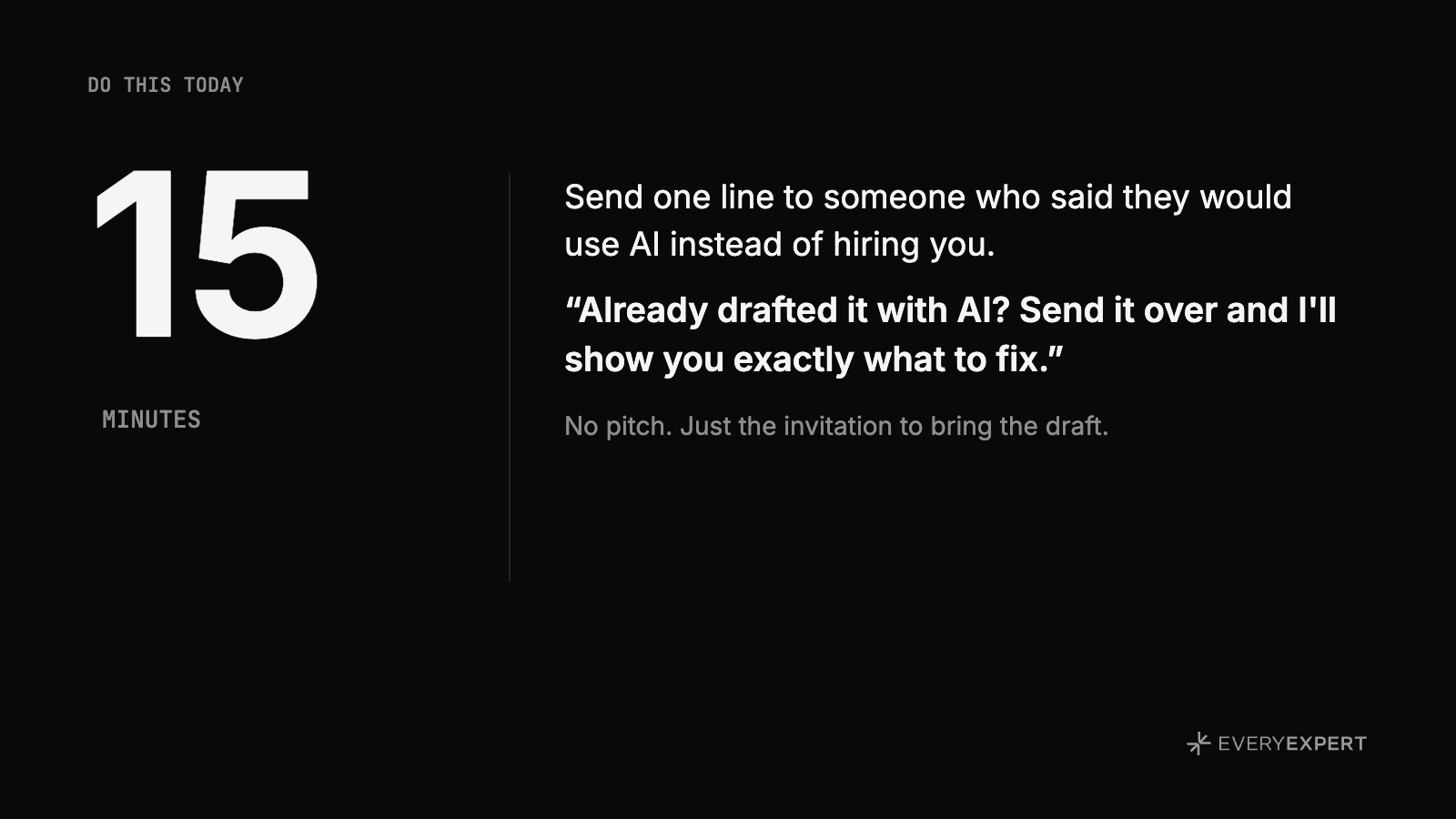
Write one line that turns a client's AI draft into a booking, and send it to one person who told you they would use AI instead of hiring you: "Already drafted it with AI? Send it over and I'll show you exactly what to fix."
Fifteen minutes, including finding the person.
Bring it back
Post your one-line offer in the community, and if someone sends you their draft, share what you found in it (with their details removed). At office hours, bring the offer as it stands today, what you currently charge for, and what clients now say they will do with AI. That gives the room enough to help you rebuild it.
Office hours
This came out of a live EveryExpert office hours session, where a member said her clients now write their own speeches with AI and send them over for her opinion. Office hours is for bringing a real situation and leaving with the next move.
Next session: [HOLD: date, time and registration link]
Not on EveryExpert yet?
EveryExpert is where people book paid calls with experts like you. Set up your page at everyexpert.com so the next person who sends you their AI draft has somewhere to book the review.