The cheaper model was faster
Three things from office hours, including the one that saved me a day of editing.
Last time we covered commenting your way into rooms your buyers are already in.
This one comes out of office hours. Somebody brings the thing that's actually stuck, we work it live, and everybody else takes the answer home. No deck, no presentation, and no part where I sell you something from the front of the room.
Last week three people brought what looked like three different problems. They turned out to be one problem wearing three different outfits. All three were using AI to make things, and the things weren't landing.
Here's what they left with, and one assignment at the bottom you can run this week.
Your framework comes before your prompt.
Somebody had a newsletter, a set of agents, and a system built to coordinate all of it. Months in, the subscriber number hadn't moved.
The tooling wasn't the problem. She hadn't decided what she's known for.
Artificial intelligence is only useful if you start with natural intelligence. Before you write a prompt you need one central theme you own, and a job title isn't a theme. Mine is Hard or Wrong. When something is difficult I ask whether it's hard or whether it's wrong, because hard isn't the enemy and wrong is.
Then you front-load the tool with yourself. One file: your background, your bio, the three stories people always react to when you tell them, and the moment you hit a problem and built the thing you now sell. Audio or written, doesn't matter. That file is the input for everything else you make.
Then the audience, in the same detail. Not "consultants in Manhattan." An empathy map. What are they saying, thinking, feeling and doing, what hurts, and what would actually help. Ask a second model for that one. Grok has direct access to X, so it pulls what your people are posting today instead of what a model assumes they believe.
Ask the tool how you're underutilizing it.
Information is free now. Discernment isn't, and that's the part you already have.
The most useful thing I did this year was ask Claude how I was underutilizing it, based on the work it could already see me doing. It came back and told me I had a pile of small systems that weren't connected to anything. So I started connecting them.
That question is also why the video above exists.
My voice was rough, I had an hour of recording nobody was going to sit through, and I didn't want to spend a day in an editor. So I asked the same question again and built the process it described.
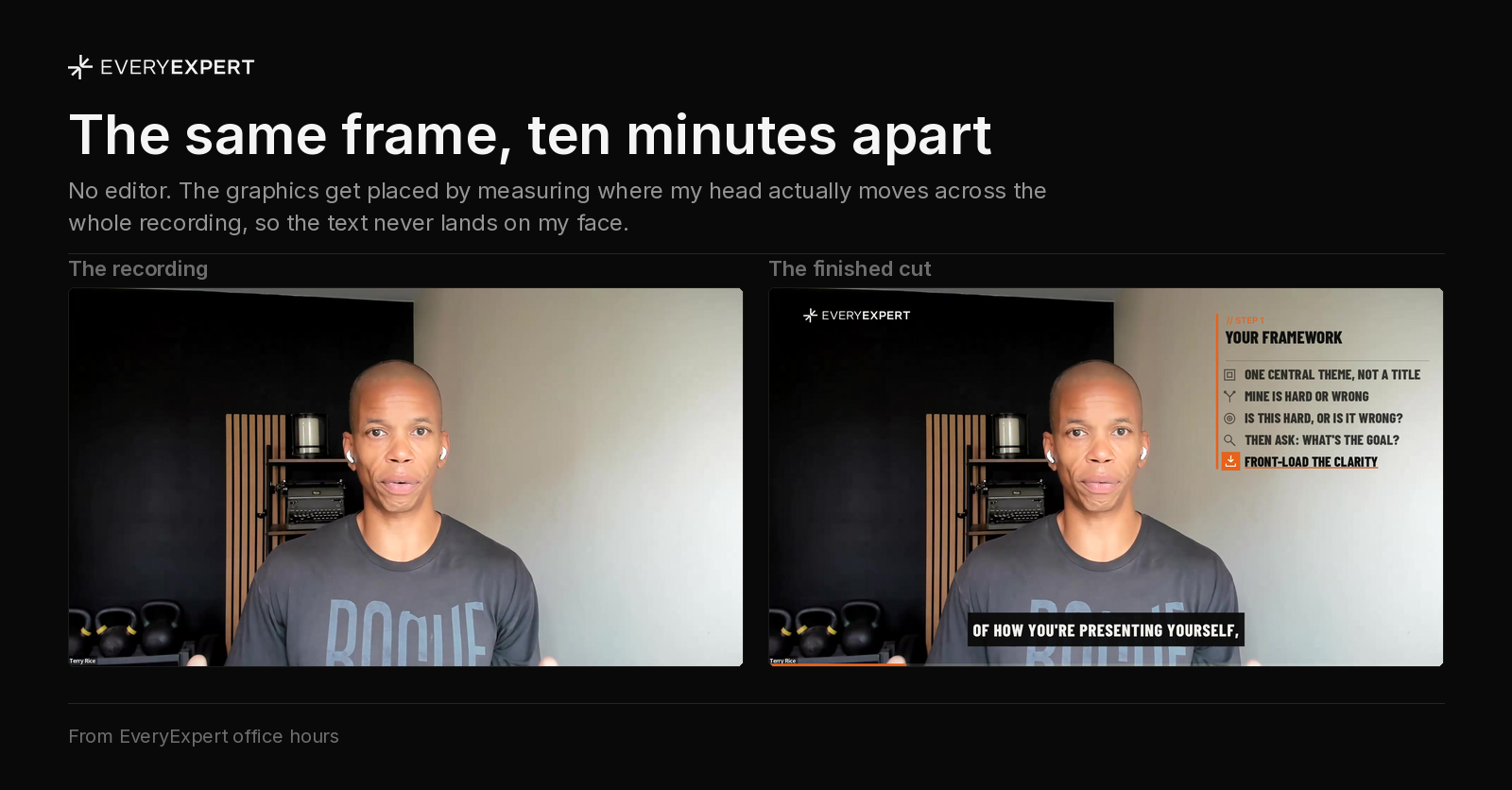
The cut, the captions, the graphics and the music were all made without an editor. The text on the wall behind me gets placed by measuring where my head actually moves across the whole recording, so it never lands on my face. Figuring that out took one conversation. Running it takes about ten minutes, and it works on any recording I point it at.
One more thing it told me that I wouldn't have worked out alone: for the building step, the cheaper model was the faster answer. I'd been paying for the expensive one to do everything.
You need one yes from one person.
The third question was about reach. She's written the books, the expertise is real and specific, and the people who need it have never heard of her.
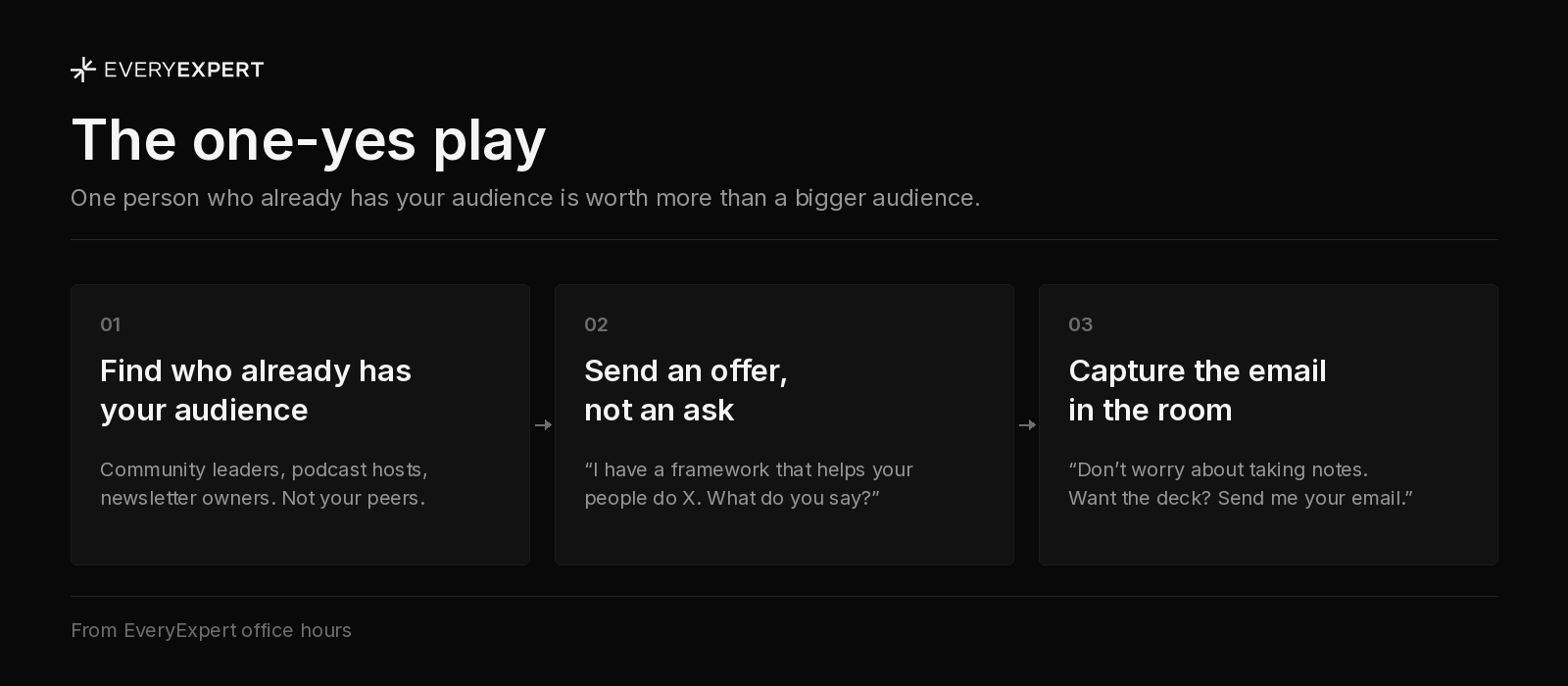
The fix is one yes, from one person who already has the room.
Last year I spoke at an event for an online community of mostly female authors. It went well, and afterwards the host offered me a webinar with her audience. Sixty people showed up to hear me talk about LinkedIn. At the end they asked how they could work with me. I dropped one link to a guide, a lot of them signed up, and a few of them booked calls and became clients.
So find the people who already have your audience, and send them an offer instead of an ask. That difference is the whole thing. "I have a framework that helps female authors do X and I'd love to share it with your people, what do you say" gets a yes. "Can you introduce me to someone" doesn't.
I've been running this for ten years. It started with the Brooklyn Chamber of Commerce.
And while you're in the room, capture the email. "Don't worry about taking notes. If you want a copy of the deck, send me your email."
Your assignment this week.
Open one file. Put in your framework, your bio, and the three stories people always react to when you tell them. That file is the input for everything you build after it.
If you have ten more minutes, paste last week's work into your AI and ask how you're underutilizing it. Then do one thing it tells you. Once.
Reply and tell me what it said. I read every one.
Office hours.
This is the room the three answers above came out of. You bring the thing that's stuck, we work it live, and most of what ends up in this newsletter starts as somebody's question on that call.
Note the day and time change: this week it's Friday, August 28, 12 to 1 ET. We're covering how to turn a webinar into a client engine, which is where the one-yes play above goes next.
Office hours runs inside the EveryExpert community. If you're not in yet, join here: https://everyexpert.com/go/community
Talk soon,
Terry
EveryExpert
P.S. Know somebody doing all the work and watching the number sit still? Forward this to them.